
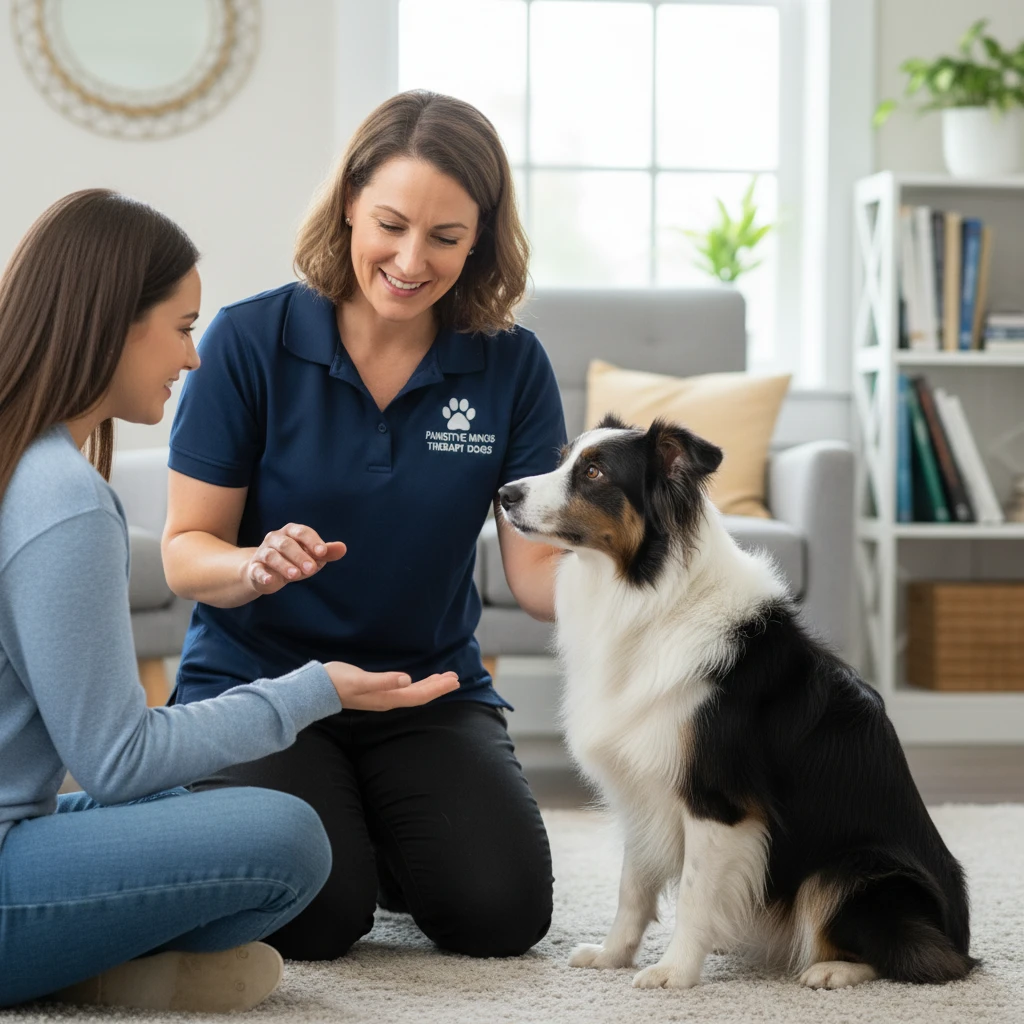
Therapy Dogs in
New Zealand
Trusted information. Clear guidance. Compassionate support. Empowering Kiwis through the healing power of animal-assisted involvement.
Therapy dogs bring comfort, connection, and calm to people in moments that matter most.
In hospitals, schools, rest homes, rehabilitation centres, and community settings across Aotearoa New Zealand, therapy dogs quietly improve wellbeing through simple human–animal connection.
DogTherapy.co.nz exists to make this world easier to understand.
"We provide clear, accurate, New Zealand–specific information about therapy dogs — how they work, where they are welcomed, how dogs and handlers are assessed, and how people can get involved safely and ethically."
Educational Only
This website is educational only. We are independent, non-commercial, and focused on helping people make informed decisions — whether you are a parent, educator, health professional, dog owner, or simply curious.
What Is a Therapy Dog?
A therapy dog is a carefully assessed dog that, together with a trained handler, provides emotional comfort and social support to people in structured settings.
Therapy dogs may visit:
- • Hospitals and rehabilitation centres
- • Rest homes and aged-care facilities
- • Schools and literacy programmes
- • Disability and mental health services
- • Community wellbeing programmes
Key Distinctions
Unlike pets: Therapy dogs are prepared for unfamiliar environments, medical equipment, sudden noises, and diverse human behaviour.
Unlike assistance dogs: Therapy dogs do not have automatic public access rights — their visits occur only with permission and planning.
Understanding these distinctions is essential for:
Safety
Protecting vulnerable people
Wellbeing
Protecting dogs from stress or harm
Ethics
Maintaining public trust in animal-assisted work
Why Therapy Dogs Matter
Human–animal interaction is a powerful catalyst for wellbeing. While not a medical treatment, therapy dogs provide a unique bridge to emotional safety.
Physiological Relief
Proven contribution to reduced anxiety and stress levels.
Emotional Stability
Improved mood and enhanced capacity for emotional regulation.
Social Connectivity
Acting as a social bridge to increase engagement and interaction.
Immediate Comfort
Compassionate presence during difficult or unfamiliar life events.
Education
"In schools, therapy dogs support reading confidence by providing a non-judgmental listener."
Healthcare
"In hospitals, they bring moments of profound calm amidst medical uncertainty."
Aged Care
"In rest homes, they reduce loneliness and unlock memories through tactile connection."
At their best, therapy dog programmes are carefully designed, well supervised, and dog-centred — ensuring profound benefits for people without compromising animal welfare.
Therapy Dogs vs Assistance Dogs
One of the most common sources of confusion in New Zealand is the difference between therapy dogs and assistance dogs.
Therapy Dogs
Social & Emotional Support
-
Visit approved facilities with a handler
-
Provide comfort and emotional support
-
No automatic public access rights
-
Operate under organisational policies
Assistance Dogs
Legal Disability Support
-
Support a disabled person with specific tasks
-
Have legal public access rights under NZ law
-
Are highly trained for individual needs
Examples: Guide Dogs, Hearing Dogs, Mobility Dogs, and Medical Alert Dogs.
This distinction matters — especially when it comes to public spaces, legal rights, and ethical use of identification such as vests or patches. Misrepresentation can harm disabled communities and undermine legitimate programmes.
DogTherapy.co.nz explains these differences clearly and responsibly.
Training, Assessment, and Suitability
"Not every friendly dog is suited to therapy work — and that’s okay."
The Suitable Dog
- Calm and emotionally stable
- Comfortable with strangers and handling
- Confident in new environments
- Non-reactive to sudden sounds or movements
- Able to disengage and rest when needed
The Trained Handler
Training focuses as much on the handler as the dog. Handlers learn:
- Reading canine stress signals
- Infection control and hygiene protocols
- Risk management in facilities
- Ethical boundaries and consent
Formal assessment is usually required through recognised organisations before visiting facilities. This protects everyone involved — especially the dog.
Where Therapy Dogs Are Used
Across Aotearoa, therapy dogs are involved in a wide range of settings, providing support under professional oversight.
Healthcare
Hospitals, rehabilitation units, mental health facilities, and hospices may host visits under strict clinical guidelines.
Education
Schools and libraries often utilize therapy dogs to support literacy confidence and emotional regulation in children.
Aged Care
Rest homes and dementia care facilities report increased engagement and reduced agitation during handler visits.
Community
Wellbeing initiatives, disaster response support, and outreach programmes in various local community centers.
Each environment has unique risks, policies, and expectations. Professional preparation is essential for a safe and successful visit.
Legal, Ethical, and Welfare
Animal-assisted work carries deep responsibility. Integrity in this field is built on the foundation of mutual respect between human and dog.
Good practice prioritises:
Dog welfare first — no dog should be pressured to “perform”
Clear consent from facilities and participants
Infection prevention and health screening
Accurate identification (without misleading claims)
Respect for cultural, personal, and medical boundaries
A Note on "Registration"
In New Zealand, there is no single government registry for therapy dogs. Unlike some international contexts, the term "registered" usually refers to a private organisation's list.
Claims of “official national registration” should always be approached carefully.
DogTherapy.co.nz explains what is legitimate, what is marketing, and what questions to ask.
Funding, Costs, and Realities
Becoming involved in therapy dog work is a rewarding commitment, but it often involves direct and indirect costs that require careful planning.
Assessments
Training and formal organisation assessment fees.
Veterinary Care
Ongoing health checks and mandatory vaccinations.
Equipment
Leads, identifying vests, and hygiene/sanitation supplies.
Commitment
Travel expenses and significant time/scheduling commitments.
Finding the Right Pathway
Some programmes offer support, subsidies, or volunteer-based pathways to help mitigate these costs. Understanding the real financial and time investment early on ensures handlers can plan responsibly.
"Our goal is to help you avoid unrealistic expectations, ensuring the longevity and success of your journey in animal-assisted support."
— DogTherapy.co.nz
A New Zealand–Focused Resource
This site is built specifically for the unique landscape of Aotearoa. Our content is curated to reflect local laws, culture, and community needs.
Local Compliance
Deep focus on NZ laws and specific public access rules for our region.
Verified Networks
Connections to local organisations and New Zealand–based programmes.
Contextual Insight
Understanding the specific NZ healthcare and education environments.
Ethical Standards
Standards and protocols relevant to the Aotearoa animal-assisted sector.
🌿 Cultural Respect
We acknowledge the importance of cultural respect. Therapy dog work must be adaptable and sensitive to the diverse communities it serves across New Zealand.
Therapy Dog FAQ for Aotearoa
Clear, evidence-based answers regarding the animal-assisted sector in New Zealand.
Is my dog suitable for therapy work?
Suitability is determined by temperament over breed. While many dogs are friendly, a therapy dog must possess a high degree of "emotional resilience." This means they can remain calm in high-stress environments, handle clumsy physical contact from strangers, and recover quickly from sudden noises or medical equipment alarms.
What training is actually required in NZ?
New Zealand does not have a single mandated government curriculum for therapy dog training. However, the industry standard involves formal assessment by a recognised non-profit or professional organisation. Training typically focuses on "Social Obedience"—the ability to perform basic cues (sit, stay, leave it) flawlessly amidst the distractions of a hospital or school.
Furthermore, the handler must be trained in risk management, infection control (NZ health protocols), and reading subtle canine stress signals to ensure the dog’s welfare is never compromised during a visit.
Where are therapy dogs allowed in New Zealand?
In NZ, therapy dogs do not have automatic public access rights. They are only allowed in specific facilities (like schools, hospices, or libraries) by invitation and under strict pre-arranged agreements. Unlike assistance dogs, you cannot take a therapy dog into a supermarket, a cinema, or onto public transport unless the specific business owner grants permission.
Access is always contingent on the dog being healthy, groomed, and currently "on duty" with an approved organisation's identification.
What’s the difference between therapy and assistance dogs?
This is the most critical distinction in NZ law. Assistance Dogs (like Guide Dogs or Mobility Dogs) are trained to perform specific tasks to mitigate a person's disability. Under the Human Rights Act 1993 and the Dog Control Act 1996, they have legal rights to enter public spaces.
Therapy Dogs are pets that visit facilities to provide therapeutic benefit to others. They do not support a single disabled handler in their daily life and, therefore, do not share the same legal protections or access rights.
How do I avoid unethical or misleading programmes?
Be wary of any programme that offers "Instant Certification" or "Official NZ Registration" for a fee without ever meeting you or your dog in person. Legitimate NZ organisations will always require an in-person temperament assessment and often a trial period.
Ask these questions: "Does your organisation provide public liability insurance?" "What are your welfare protocols if my dog gets stressed?" "Are you a registered NZ charity or a for-profit business?" Ethical programmes prioritse the dog's choice to participate.
Providing Aotearoa with evidence-based clarity to protect handlers, facilities, and animal welfare.
Our Commitment
Feedback Welcome
If you spot outdated information, gaps, or areas needing improvement, we welcome constructive feedback to keep this resource reliable for all New Zealanders.
Contact the teamStart Exploring
Whether you are at the very beginning of your journey or simply learning more, you’re in the right place.
Understanding comes first. Compassion follows.
DogTherapy.co.nz • Providing Clarity for Aotearoa